What Happens When Your Bicycle Becomes Your Backup Plan for Public Transport?
Public transport is an important part of everyday life for many people. Trains and buses help commuters get to work, visit friends and travel across town without relying on a car. However, delays, cancellations, overcrowding and unexpected changes can sometimes make a journey more difficult than planned.
This is where having a bicycle can make a real difference. Instead of depending entirely on buses or trains, you have another way to reach your destination or complete part of your journey. A bicycle can provide greater flexibility, particularly when your usual transport options are disrupted.
Whether you cycle every day or only occasionally, understanding how to combine cycling with public transport can help you plan more reliable journeys and make better use of your time.
1. When Your Train Is Delayed, a Bicycle Can Offer Another Option
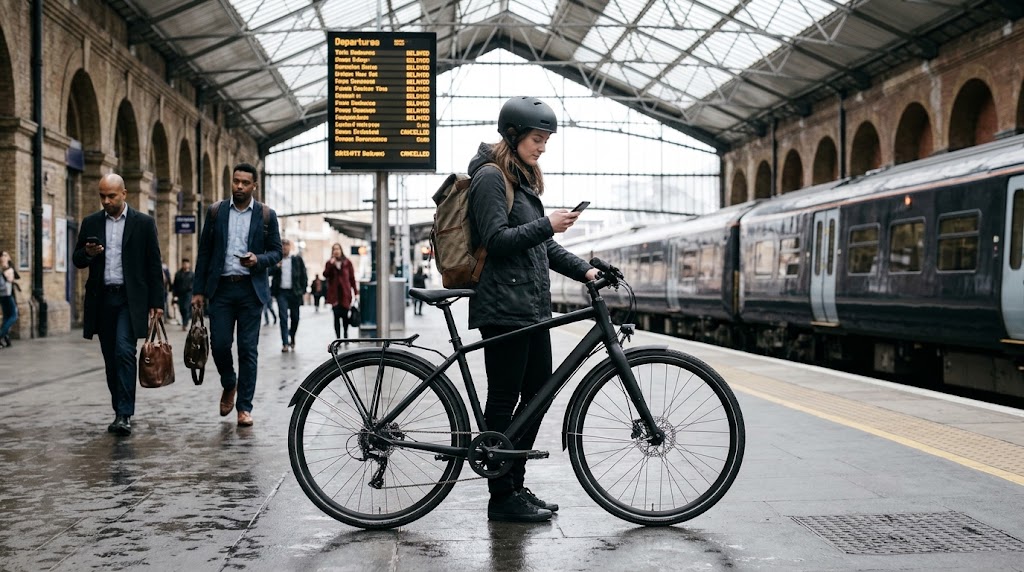
Few things are more frustrating than arriving at a station only to discover that your train has been delayed or cancelled. If you need to reach work, attend an appointment or collect something before a shop closes, waiting for the next service may not be convenient.
A bicycle can give you another option, provided the distance, route and conditions make cycling practical. You might be able to ride to another station with a better connection, cycle to a nearby workplace or complete the final part of your journey without waiting for a replacement bus.
For example, someone travelling across London might normally take a train followed by a short bus journey. If the bus service is disrupted, cycling the final section could be a reasonable alternative.
The important thing is to plan ahead rather than assume cycling will always be faster. Check the distance, road conditions and available routes before setting off. If the alternative journey involves unfamiliar roads or heavy traffic, allow extra time and choose a route that suits your experience.
2. Combining Cycling with Trains Can Make Longer Journeys Easier
A bicycle does not have to replace public transport completely. In many situations, combining the two can be more practical than using either option alone.
You could cycle from home to a railway station, take the train for the longer part of your journey and then cycle from the destination station to your workplace. This approach can reduce the time spent walking between connections or waiting for a local bus.
It can be particularly useful when your home or workplace is some distance from the nearest station. Cycling can help bridge that gap without requiring you to own or use a car.
However, check the train operator’s bicycle policy before travelling. Some services allow ordinary bicycles only at certain times or require reservations, while folding bicycles may have different conditions. These rules can vary by operator and route.
If you plan to take your bicycle on the train regularly, consider how easy it is to lift, manoeuvre and store. A lighter bicycle or a folding model may be more convenient when stations have stairs, narrow entrances or limited space.
3. A Folding Bicycle Can Be Useful for Public Transport Users
For people who frequently combine cycling with buses and trains, a folding bicycle may be worth considering.
Its main advantage is that it can be folded into a more compact shape, making it easier to carry and store in suitable spaces. This can be helpful when travelling through busy stations, living in a flat with limited storage or keeping a bicycle under a desk at work.
A folding bicycle can also reduce the need to leave a full-sized bicycle locked outside while you complete the rest of your journey. This may be useful when secure bicycle parking is limited.
Before choosing one, think about how far you intend to ride and how often you will need to carry it. Folding mechanisms, wheel size, weight, gearing and riding position can all affect the experience.
A compact design is not automatically the best choice for every cyclist. If you regularly ride longer distances or travel over uneven roads, you should consider comfort and handling alongside portability.
The right bicycle is the one that fits your actual routine rather than simply looking convenient in the shop.
4. Plan Your Route Before You Need an Alternative
Having a bicycle available is useful, but it is even more helpful when you already know where you could ride.
If your usual train or bus service is disrupted, trying to find a suitable route while standing at a crowded station can add unnecessary stress. Spending a little time exploring alternatives beforehand can make a difference.
Look for cycle routes, quieter roads and practical connections between stations and your destination. Consider whether the journey includes steep hills, complicated junctions, roadworks or sections where cycling may be uncomfortable.
Navigation apps can help you compare routes, but it is worth checking the suggested roads rather than following directions automatically. The shortest route may not be the most suitable for your confidence or bicycle.
You should also estimate how long the alternative journey might take. Include time for unlocking your bicycle, checking your equipment and parking securely at the destination.
A familiar backup route can help you make a more informed decision when public transport does not run as expected.
5. Keep Your Bicycle Ready for Unexpected Journeys
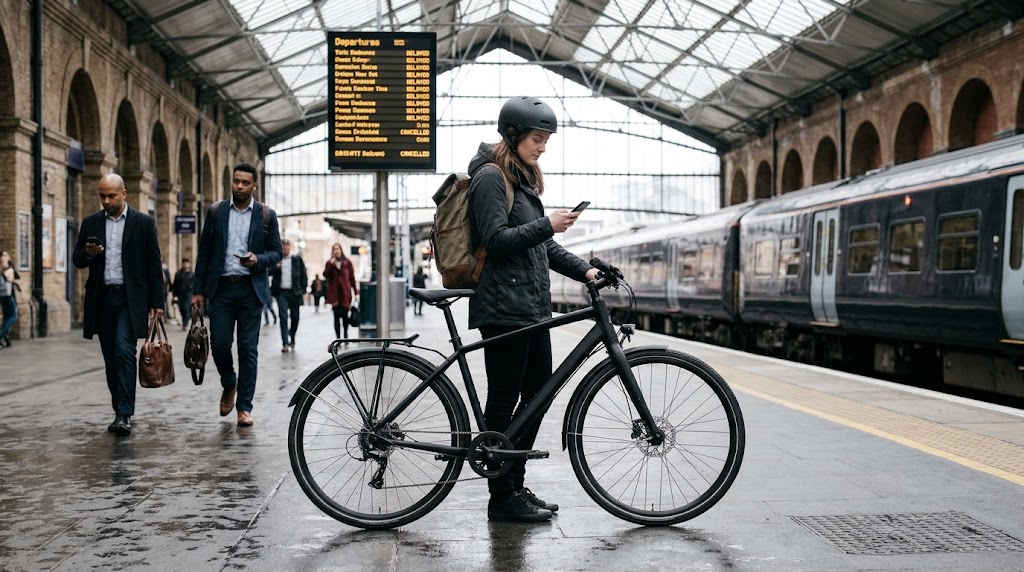
A backup plan only works if your bicycle is in suitable condition when you need it. A flat tyre, poorly adjusted brake or malfunctioning light can turn a convenient alternative into another problem.
You do not need to perform a complete mechanical inspection before every short ride, but regular checks are important. Before setting off, make sure the tyres are properly inflated, the brakes work and the wheels are secure.
If your bicycle has been sitting unused for several days, check for obvious problems before relying on it for an important journey. Look for visible tyre damage, a loose component or anything that affects steering and braking.
It is also sensible to keep basic equipment available. A spare inner tube or puncture repair kit, tyre levers, a suitable pump and a small multi-tool can help with some common roadside problems. Make sure you know how to use the equipment before you need it.
For commuters, keeping the chain clean and lubricated and arranging servicing when necessary can help maintain reliable performance.
A bicycle that is ready to ride is much more useful when a train is cancelled or a bus fails to arrive.
6. Carry the Essentials for a Flexible Commute
When cycling is part of your backup transport plan, carrying a few essentials can make the journey more comfortable.
Lights are particularly important if you may be travelling early in the morning, in poor weather or after dark. Reflective clothing or accessories can also help other road users see you, while a properly fitted helmet provides additional protection.
A reliable lock is useful if you need to leave your bicycle at a station or another public location. Choose a suitable locking method and use designated cycle parking wherever possible.
Think about what you normally carry on public transport. A work laptop, lunch, spare clothing or shopping may be easier to transport in a pannier or suitable bicycle bag than in a heavy backpack.
Weather protection is worth considering too. A lightweight waterproof jacket can be helpful when conditions change unexpectedly, and carrying a small cloth can be useful for wiping down your bicycle after a wet ride.
You do not need to carry every possible accessory. Focus on the items that support your usual journey and make it easier to switch between cycling and public transport.
7. Consider the Cost and Practical Benefits
Using a bicycle as a backup for public transport may also help you manage travel expenses.
For example, cycling to a station could reduce the need for a separate local bus journey. Riding a short distance instead of paying for a taxi during a disruption may also be an option when the route is suitable.
The actual savings depend on your journey, bicycle costs, maintenance requirements and the transport services available. A bicycle still needs occasional repairs, replacement parts and secure storage, so it is worth considering the overall cost rather than looking only at individual fares.
There can be other benefits as well. Cycling may provide an opportunity to fit physical activity into a busy day, and travelling under your own power can offer more flexibility on suitable routes.
However, cycling is not always the best alternative. Heavy rain, dangerous road conditions, long distances or physical limitations may make another form of transport more appropriate. Having options is the real advantage.
8. Know When Cycling Is Not the Right Choice
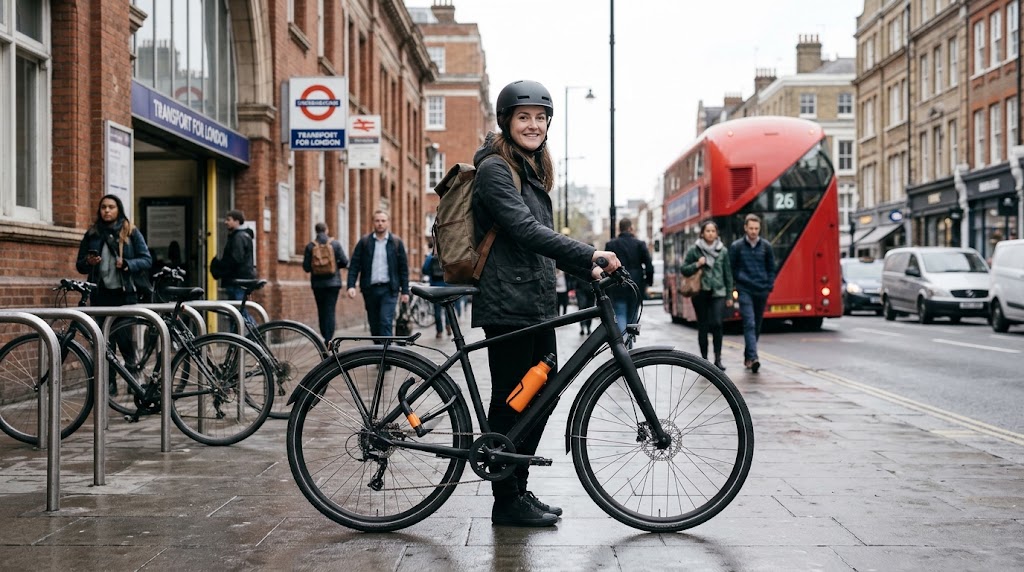
A sensible backup plan should include knowing when not to ride.
If visibility is poor, roads are icy, flooding is present or traffic conditions make a route unsafe, it may be better to wait for another service or choose a different transport option. You should never feel pressured to cycle simply because your usual bus or train is unavailable.
Likewise, consider your physical condition, the distance involved and whether you have the right equipment. A journey that seems manageable on a map may be difficult if you are carrying heavy luggage or unfamiliar with the area.
Check travel updates when possible and keep an alternative route in mind. If you are planning to take your bicycle on public transport, confirm the relevant rules before travelling.
The goal is not to replace every train or bus journey with cycling. It is to give yourself another practical option when circumstances allow.
Conclusion
When your bicycle becomes a backup plan for public transport, everyday travel can become more flexible. You may be able to reach another station, avoid an unnecessary wait or complete the final part of a journey without relying on an additional bus connection.
The key is preparation. Choose a bicycle that suits your routine, learn a few alternative routes, keep essential equipment ready and maintain your bike regularly. Most importantly, consider the weather, traffic and journey distance before deciding to ride.
Whether you are looking for a practical commuter bicycle, a folding model for mixed transport journeys or useful accessories for everyday riding, Station Bicycles can help you explore options that suit your needs. With the right setup and a little planning, cycling can become a useful addition to your travel routine whenever public transport does not go according to plan.