How to Choose the Right Bike for Commuting in London
Cycling to work is a practical way to travel around London. It can help you avoid busy roads, reduce your daily travel costs and fit some exercise into your routine. Whether you are travelling a few miles to work, cycling to the station or using your bike for everyday errands, choosing the right bicycle can make your journey more comfortable and enjoyable.
However, with so many different types of bikes available, deciding which one suits your needs can be difficult. Road bikes, hybrid bikes, mountain bikes and electric bikes all offer different benefits, and the best choice depends on your route, budget, riding experience and the distance you need to cover.
In this guide, we explain how to choose the right bike for commuting in London and what to consider before making your purchase.
1. Think About Your Daily Commute
Before choosing a bicycle, consider how you will use it most often. Your daily journey should influence the type of bike you buy.
For example, a short commute along relatively smooth roads may require a different bicycle from a longer journey involving hills, rough surfaces and several changes in direction.
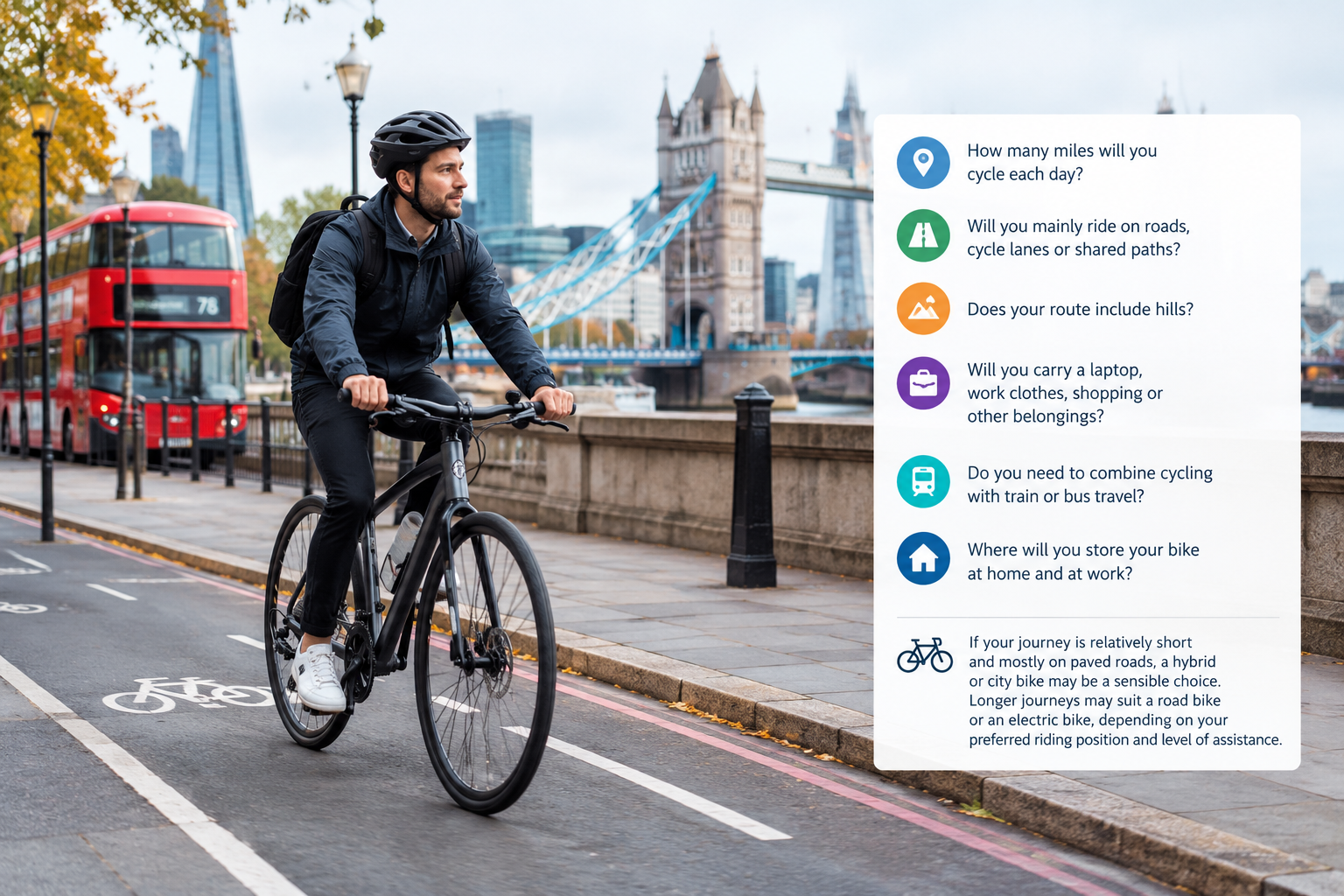
Ask yourself a few simple questions:
How many miles will you cycle each day?
Will you mainly ride on roads, cycle lanes or shared paths?
Does your route include hills?
Will you carry a laptop, work clothes, shopping or other belongings?
Do you need to combine cycling with train or bus travel?
Where will you store your bike at home and at work?
If your journey is relatively short and mostly on paved roads, a hybrid or city bike may be a sensible choice. Longer journeys may suit a road bike or an electric bike, depending on your preferred riding position and level of assistance.
Thinking about these details first can help you avoid spending money on a bicycle that does not suit your everyday needs.
2. Choose the Right Type of Commuter Bike
Different bicycles are designed for different riding conditions. Understanding the main options will help you narrow down your choices.
Hybrid Bikes
Hybrid bikes are a popular option for everyday commuting because they combine features of road bikes and mountain bikes. They usually have a comfortable riding position, flat handlebars and tyres suitable for a mixture of paved roads and cycle paths.
Many hybrid models also include mounting points for mudguards, luggage racks and bottle cages. These features are useful if you want to carry your belongings or ride throughout the year.
A hybrid bike is worth considering if you want one bicycle for commuting, shopping and weekend rides.
Road Bikes
Road bikes are designed to travel efficiently on paved surfaces. They typically have lightweight frames, narrow tyres and drop handlebars that offer different hand positions.
Their design can make them suitable for longer commutes where speed and efficiency are important. However, some riders may find the more forward-leaning position less comfortable, particularly if they are new to cycling.
If your journey mainly follows smooth roads and you want to cover longer distances, a road bike could be a good option.
City Bikes
City bikes are designed around practical everyday transport. Many feature an upright riding position, comfortable saddles and components suited to regular urban use.
Depending on the model, you may also find built-in lights, mudguards, a luggage rack or a chain guard. These features can make everyday cycling more convenient by reducing the need to purchase additional accessories.
A city bike is a good option if comfort and practicality matter more to you than speed.
Mountain Bikes
Mountain bikes are built to handle rough terrain, with wider tyres, sturdy frames and, on many models, suspension. They can be useful if your commute includes unpaved paths or uneven surfaces.
However, a mountain bike with aggressive off-road tyres and heavy suspension may require more effort on ordinary London roads than a hybrid or road bike.
If you prefer a mountain bike for commuting, consider a model with tyres and gearing suited to your regular route.
Electric Bikes
Electric bikes, often called e-bikes, provide motor assistance while you pedal. They can make hills and longer journeys feel more manageable, particularly if you want to arrive at work without becoming too tired.
They are also worth considering if your commute would otherwise be too long to cycle comfortably every day.
Before buying an e-bike, compare battery capacity, realistic riding range, charging arrangements, overall weight and the availability of replacement parts. Remember that battery range varies with rider weight, terrain, weather, assistance level and other conditions.
For UK road use, check that the model meets the requirements for a legal electrically assisted pedal cycle. A compliant EAPC generally has a maximum continuous rated motor power of 250 watts and motor assistance that cuts off at 15.5 mph (25 km/h), although you can pedal faster without assistance.
3. Make Sure the Bike Fits You Properly
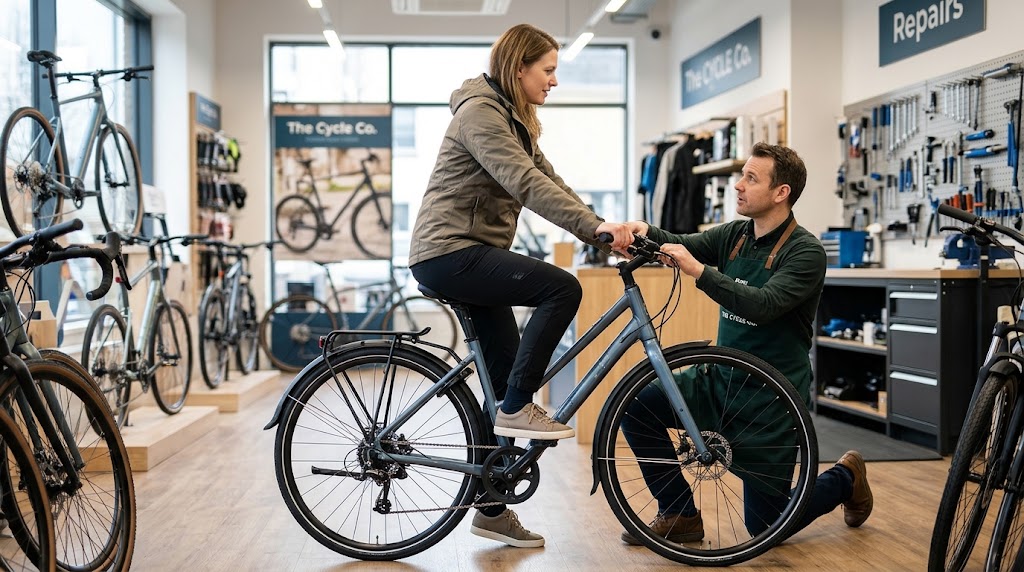
Getting the correct frame size is one of the most important parts of buying a commuter bike. A bicycle that is too large or too small can make riding uncomfortable and affect your control.
When trying a bike, check that:
You can reach the handlebars without stretching excessively.
Your arms remain comfortably bent while riding.
You can adjust the saddle to a suitable height.
You can operate the brakes and gears easily.
You feel balanced and in control when stopping and starting.
Frame sizes vary between manufacturers and bicycle styles, so do not rely on the size label alone. A medium frame from one brand may fit differently from a medium frame from another.
If possible, visit a cycle shop and try a suitable size before buying. Staff can help you find a comfortable position and make adjustments to the saddle and handlebars.
4. Check the Gears and Brakes
London commuting often involves frequent stopping, starting and changing pace. Reliable gears and brakes can make these journeys easier.
Gears
If your route includes hills, bridges or changes in gradient, a bike with a suitable range of gears can help you maintain a comfortable pedalling speed.
For relatively flat journeys, a simpler drivetrain may be sufficient. Single-speed bikes can be easy to maintain, although they may be less suitable for routes with steep hills.
The number of gears is not the only thing that matters. The range of available ratios and how smoothly the gears operate are also important.
Brakes
Rim brakes and disc brakes are both found on commuter bicycles.
Rim brakes are often straightforward to maintain and can be a practical choice for everyday riding. Disc brakes generally offer consistent braking performance in wet conditions, although their effectiveness depends on the components, setup and maintenance.
Whichever system you choose, check that the brakes operate smoothly and provide reliable stopping power. Regularly inspect the brake pads and have worn components replaced.
5. Consider Tyres for London Roads
Your tyres influence comfort, grip, rolling resistance and puncture protection.
Narrower tyres can work well on smooth roads, while moderately wider tyres may offer extra comfort on rough tarmac and uneven cycle paths. The best width depends on your bicycle, clearance and personal preference.
For everyday commuting, consider tyres with puncture-resistant construction if your route regularly includes broken glass, road debris or rough surfaces.
Also pay attention to tyre pressure. Keeping your tyres inflated within the manufacturer’s recommended range can improve handling and reduce the risk of pinch punctures. The correct pressure depends on tyre width, rider weight, load and riding conditions.
Before commuting regularly, check your tyres for cuts, embedded debris and excessive wear.
6. Choose Practical Accessories
The right accessories can make your daily commute safer and more convenient. You do not need to buy everything immediately, but a few essentials are worth considering.
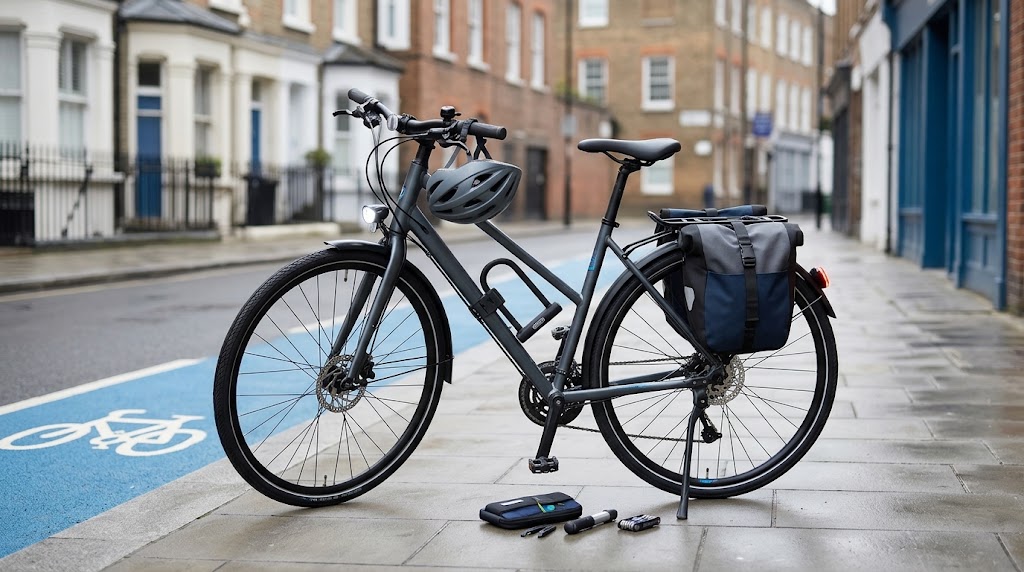
Front and rear lights: Use suitable lights so you can see and be seen in low-light conditions. Make sure your bicycle meets the applicable UK lighting requirements when riding at night.
A reliable lock: A good-quality lock is essential when leaving your bicycle unattended. Choose one appropriate for your bike’s value and where you intend to park it.
Mudguards: These help protect you and your bicycle from water and road spray, particularly during wet weather.
A luggage rack or pannier bags: These provide a practical way to carry a laptop, lunch, spare clothing or shopping without placing everything on your back.
A helmet: A properly fitted cycle helmet can help protect your head in certain crashes. Although wearing one is not generally a legal requirement for adult cyclists in the UK, it is an option worth considering.
A repair kit: A spare inner tube or suitable puncture repair kit, tyre levers and a portable pump can help you deal with common punctures.
A bell: A bell can help you alert other path users to your presence when appropriate.
If you commute throughout the year, prioritise equipment that suits your route, storage arrangements and typical weather conditions.
7. Think About Maintenance Before You Buy
Every bicycle needs maintenance, but some designs may be easier or cheaper to look after than others.
Before purchasing, consider whether replacement tyres, brake pads, chains and other common parts are readily available. It is also worth checking whether you can obtain servicing locally.
A simple commuter bike with widely available components may be a practical choice if you want to keep maintenance straightforward.
Regardless of the model, develop a basic maintenance routine. Check your tyres, brakes and chain regularly, keep the drivetrain clean and lubricated, and pay attention to unusual noises or changes in handling.
If your bike develops slipping gears, weak brakes or a persistent mechanical problem, arrange a professional inspection before continuing to use it for daily commuting.
8. Set a Realistic Budget
The cheapest bicycle is not always the most economical choice in the long term. A bike that does not fit properly or requires frequent repairs may become frustrating to use.
When setting your budget, include more than the initial purchase price. You may also need to allow for a lock, lights, mudguards, a helmet, luggage and routine servicing.
A new bicycle offers the advantage of buying a model in known condition with the applicable retailer warranty. A second-hand bike may provide better specifications for the money, but its condition, service history and ownership should be checked carefully.
If you are considering a used bicycle, inspect the frame for damage, test the brakes and gears, examine the tyres and wheels, and confirm that the bike has not been reported stolen.
Choose a bicycle that suits your actual commute rather than paying extra for features you are unlikely to use.
9. Test Ride Before Making Your Decision
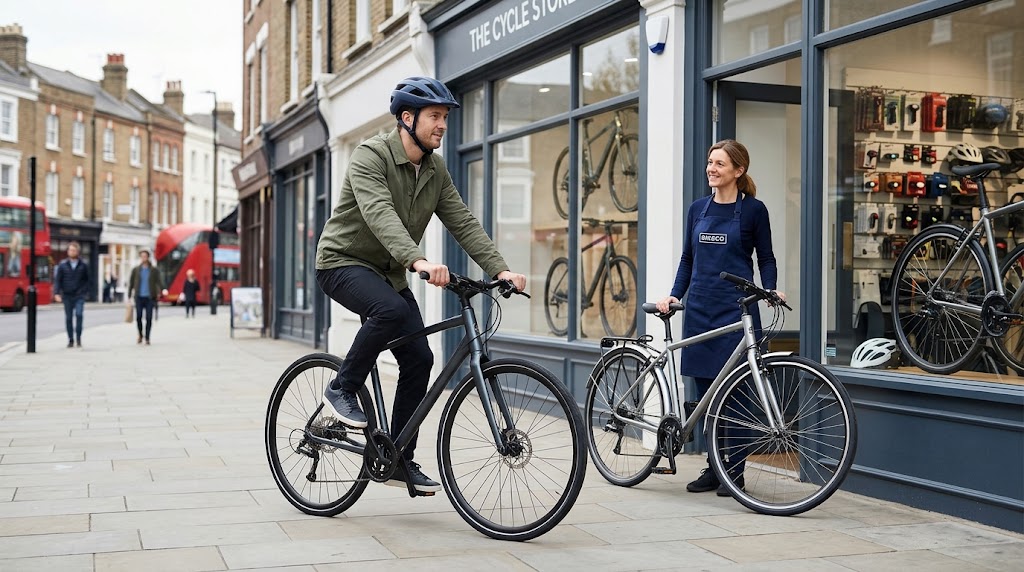
If you have narrowed your options down to two or three bikes, a test ride can help you decide which feels best.
Try to assess comfort, steering, braking, gear changes and how easily you can get on and off the bicycle. If you plan to carry a heavy bag or use a luggage rack, think about how the additional weight may affect handling.
Pay attention to your riding position. You should feel comfortable reaching the handlebars and operating the controls without straining your shoulders, wrists or back.
For an electric bike, test the different assistance levels if possible and check that you can comfortably manage its weight when walking alongside it or manoeuvring it into storage.
A few minutes of testing can reveal differences that are difficult to judge from product descriptions alone.
Final Thoughts
Choosing the right bike for commuting in London comes down to finding a good balance between comfort, practicality, reliability and budget.
Hybrid bikes are a versatile starting point for many everyday commuters, while road bikes can suit longer journeys on paved roads. City bikes prioritise practical urban transport, mountain bikes can handle rougher routes, and electric bikes offer pedal assistance for riders who want extra support.
Before buying, consider your route, choose the right frame size, check the gears and brakes, and allow for the accessories you will need throughout the year.
At Station Bicycles, you can explore the options available for your cycling needs and find out which type of bicycle best suits your daily journeys. Taking the time to choose carefully can help make your London commute more comfortable, convenient and enjoyable.