Cycling to Work in London: A Beginner’s Guide to a Stress Free Commute
Cycling to work in London can be a practical way to start the day feeling refreshed while avoiding crowded trains, delayed buses, and traffic queues. For many people, a bicycle offers greater flexibility, allowing them to travel at their own pace and discover routes that may be difficult to enjoy from a car or public transport.
However, if you are new to commuting by bike, riding through busy streets can seem challenging at first. Questions about choosing the right bicycle, finding safe routes, dealing with traffic, and staying comfortable during the journey are entirely normal. With a little preparation and the right equipment, cycling to work can become a convenient part of your daily routine.
1. Choose the Right Bike for Your Daily Journey
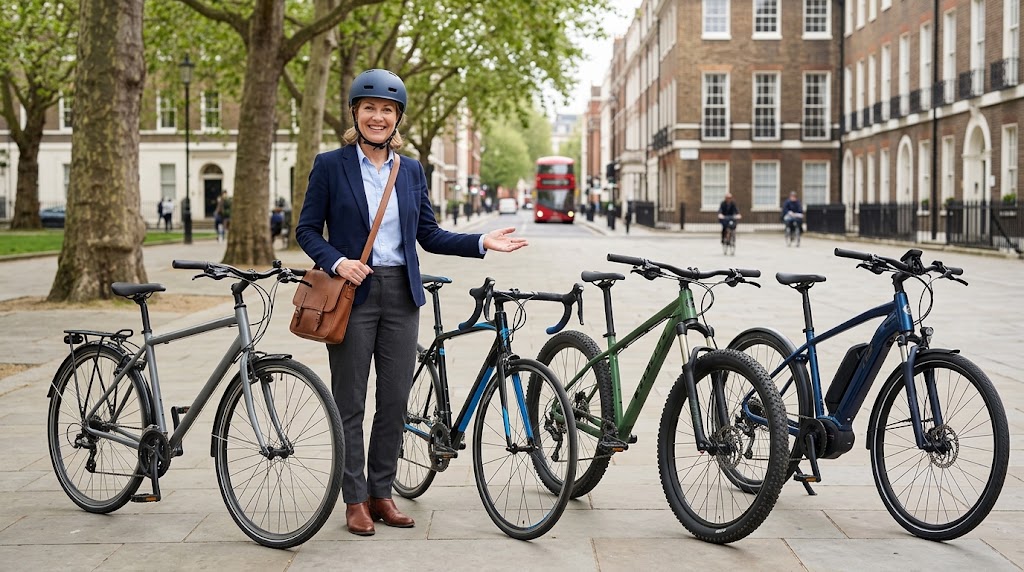
Choosing a suitable bicycle is one of the first steps towards a comfortable commute. The best option depends on your route, travel distance, budget, and personal preferences.
Hybrid bikes are a popular choice for everyday commuting because they combine the comfortable riding position of a mountain bike with the efficiency of a road bike. They work well for many urban journeys and are suitable for cyclists who want one bicycle for commuting and occasional leisure rides.
Road bikes are worth considering if you travel longer distances on suitable paved roads and prefer a lighter bicycle with a more aerodynamic riding position. However, their narrower tyres and riding position may not suit everyone.
Mountain bikes offer wider tyres and additional grip, but their heavier frames and more treaded tyres can make them less efficient on ordinary city streets. They may be suitable if your route includes rough paths or you also enjoy off-road cycling.
Electric bikes are another option, particularly if your commute includes steep hills or you want assistance on longer journeys.
Whatever type you choose, make sure the frame size suits your height and that the brakes, gears, tyres, and steering are in good working condition.
2. Plan Your Route Before You Leave Home
The shortest route is not always the best route for cycling. Busy junctions, complicated roundabouts, and roads with heavy traffic can make an otherwise quick journey uncomfortable for beginners.
Before your first commute, use a cycling route planner to explore different options. Look for protected cycle lanes, quieter streets, designated cycleways, and routes that allow you to ride at a comfortable pace.
London has an expanding network of cycle routes, including routes along parts of the Cycleway network. Depending on your starting point and destination, these may offer a more comfortable alternative to heavily trafficked roads.
It is also worth testing your chosen route during a quieter period, such as a weekend morning. This gives you an opportunity to identify difficult junctions, roadworks, narrow sections, and places where you may need to slow down.
Allow extra time for your first few journeys. Once you become familiar with the route, you can estimate your travel time more accurately and adjust your departure time accordingly.
3. Make Sure You Have the Essential Cycling Equipment
You do not need expensive equipment to begin commuting, but a few essentials can make your journey safer and more convenient.
Bicycle lights: Use a white front light and a red rear light after dark and whenever visibility is poor. UK lighting regulations set requirements for lights and reflectors when cycling at night. Check that your lights are charged, securely attached, and working before leaving home.
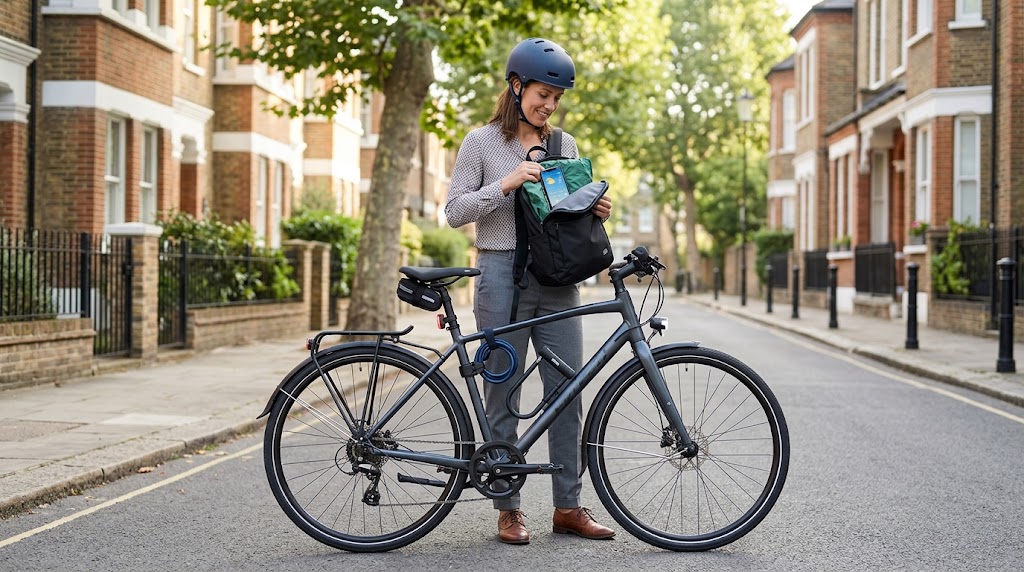
A reliable lock: London cyclists should take bicycle security seriously. Choose a strong, good-quality lock and secure the frame and, where possible, a wheel to an immovable cycle stand. Use secure, well-lit parking locations whenever available.
A properly fitted helmet: A helmet is a sensible safety precaution for many riders. It should fit securely and sit correctly on your head without tilting backwards or forwards.
A puncture repair kit: Carry a spare inner tube or repair kit, tyre levers, and a pump suitable for your bicycle. Knowing how to repair a puncture can prevent a minor problem from disrupting your entire commute.
A bell and reflective accessories: A bell can help alert other path users when appropriate, while reflective clothing or accessories can make you easier to notice in poor light.
Keep your equipment organised in a small backpack or bicycle bag so that you can leave home without searching for essential items every morning.
4. Learn How to Ride Safely in London Traffic
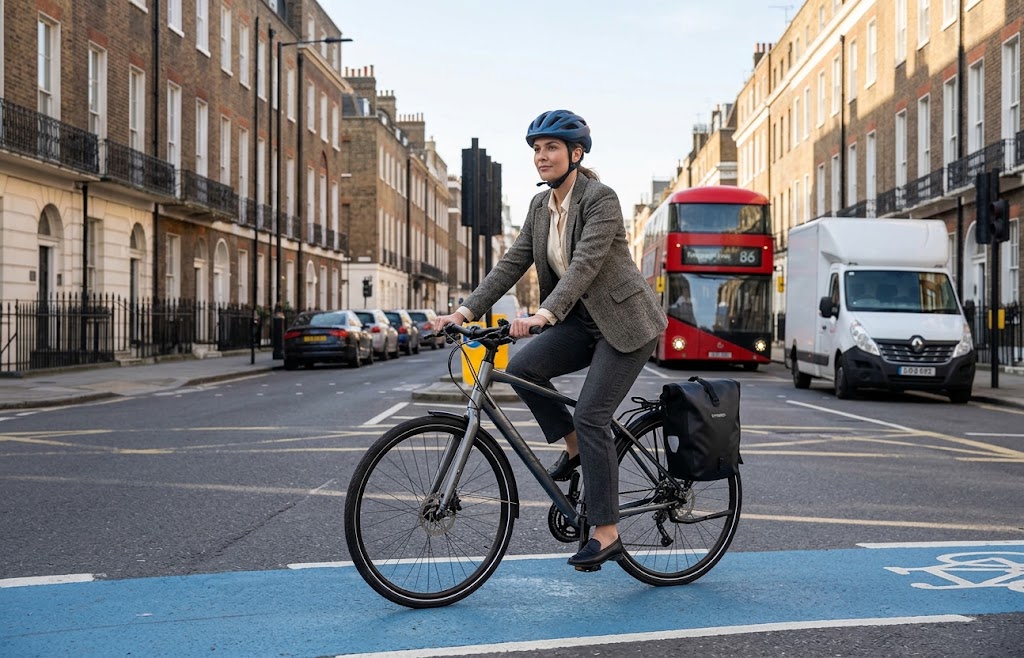
London’s roads can be busy, especially during rush hour. Buses, delivery vehicles, parked cars, pedestrians, and other cyclists all require your attention.
The key is to ride predictably, remain aware of your surroundings, and give yourself enough space to react to changing conditions.
Look ahead rather than concentrating only on the road immediately in front of your wheel. Watch for junctions, traffic signals, potholes, roadworks, and vehicles that may turn across your path.
Signal clearly before turning or changing position when it is safe to do so. Check behind you before moving sideways, and avoid making sudden manoeuvres that could surprise other road users.
Be particularly careful around large vehicles. Buses and lorries have blind spots, and drivers may not always see a cyclist travelling beside them. Avoid riding alongside a large vehicle near a junction, especially when it may be preparing to turn left.
Give parked cars sufficient space to reduce the risk of being struck by an opening door. Do not feel pressured to ride too close to the kerb simply to allow faster traffic to pass.
Above all, remember that arriving a few minutes later is better than taking unnecessary risks.
5. Dress for Comfort and Changing Weather
London weather can change quickly, so it helps to prepare for rain, wind, and cooler temperatures even when the morning looks pleasant.
Choose comfortable clothing that allows you to move freely while pedalling. If you wear loose trousers, keep the fabric away from the chain and moving parts of the bicycle.
A lightweight waterproof jacket can be useful during unexpected showers. Breathable fabrics are particularly helpful because cycling can make you warm even when the outside temperature is low.
During colder months, consider gloves and additional layers. In warmer weather, breathable clothing and access to drinking water can help you stay comfortable.
If your workplace has limited facilities, keep a spare shirt, deodorant, or a small towel at the office. You could also choose a slightly slower pace to avoid arriving overheated.
Mudguards are another worthwhile addition, especially if you regularly cycle in wet conditions. They help reduce the amount of water and dirt thrown onto your clothes.
6. Prepare Your Bicycle Before Every Ride
A quick bicycle check takes only a few minutes and can help you identify problems before they become serious.
Start by checking the tyres. They should be inflated to an appropriate pressure within the range printed on the tyre sidewall. Look for cuts, embedded glass, unusual bulges, and signs of excessive wear.
Next, test both brakes. The levers should feel firm, and the bicycle should slow down effectively when you apply them. If the brakes feel weak, make unusual noises, or do not work correctly, arrange an inspection before continuing to ride.
Check that the chain is clean enough, properly lubricated, and moving smoothly through the gears. A dry or dirty chain can increase wear and make pedalling less efficient.
Finally, make sure the wheels are secure, the handlebars feel stable, and the lights are functioning correctly.
Regular maintenance is particularly important for commuters because a bicycle used almost every day can experience wear more quickly than one used occasionally. If you notice a mechanical problem you cannot safely resolve, ask a qualified bicycle mechanic to inspect it.
7. Make Your Morning Commute Easier
A stress-free journey often begins before you get on your bicycle. Preparing a few things the night before can make your morning routine much simpler.
Check the weather forecast and choose suitable clothing. Charge your lights, pack your work essentials, and make sure your lock and repair kit are ready to go.
If possible, keep a small set of toiletries or spare clothes at your workplace. This can be particularly useful when you have meetings or need to look presentable after a longer ride.
Avoid setting an unrealistic target for your journey time during your first week. Traffic signals, road conditions, and unfamiliar junctions can all affect how long it takes to reach your destination.
Start with manageable distances and gradually build confidence. You might cycle to work once or twice a week before making it a daily habit.
If you feel nervous about a particular section of your route, practise it separately or find a quieter alternative. Building confidence gradually is often more effective than forcing yourself into difficult traffic before you are ready.
8. Understand the Rules of Cycling in the UK
Before commuting regularly, familiarise yourself with the Highway Code rules that apply to cyclists.
Obey traffic lights and road signs, give pedestrians appropriate consideration, and use cycle lanes where appropriate. Do not ride on pavements unless cycling is specifically permitted.
At junctions, take a position that makes your intended direction clear and check carefully before turning. Use appropriate hand signals when it is safe, and remain alert to vehicles entering or leaving side roads.
At night, make sure your bicycle has the legally required lights and reflectors. Keep your mobile phone out of your hands while riding, and never rely on headphones or distractions that prevent you from hearing important traffic sounds.
If you are unfamiliar with cycling in traffic, consider a cycle training session. Local cycling initiatives and training providers may offer practical instruction to help adults improve their road awareness, handling, and confidence.
Understanding the rules and practising good road habits can make commuting more predictable for you and the people around you.
Conclusion
Cycling to work in London does not have to be complicated. By choosing a suitable bicycle, planning a comfortable route, using essential safety equipment, and maintaining your bike regularly, you can make your daily journey more manageable and enjoyable. Start slowly, give yourself time to build confidence, and make adjustments as you discover what works best for your routine. Whether you are buying your first commuter bike or preparing an existing bicycle for everyday use, Station Bicycles can help you explore suitable cycling options and accessories for your journey through London.