
Winter cycling in London is a very different experience from riding through the city in summer. The roads are wetter, the daylight disappears far too early, and the grime seems to build up on your bike almost overnight. Yet despite the cold fingers and grey skies, thousands of commuters keep riding through winter because cycling remains one of the quickest and most reliable ways to get around the capital. The key to enjoying it rather than enduring it is knowing how to prepare your bike properly. Winterising your London commute bike is not about expensive upgrades or specialist equipment. It is about understanding what winter does to your bike and making practical changes that protect both the machine and the rider. With a little planning and regular care, your bike can remain dependable even on the wettest January mornings.
Why London Winters Are Tough on Bikes
London winter climate is harsh in a very specific way. It is rarely about deep snow or extreme cold. Instead, it is the constant dampness, road spray, and grit that causes the most damage. Rainwater mixed with dirt and salt from the roads works its way into chains, gears, brakes, and bearings. Over time, this causes corrosion, poor shifting, and reduced braking performance. Shorter days also mean more time riding in low light or darkness, when visibility is reduced and reaction times need to be sharper. Cold temperatures make materials contract slightly, revealing weaknesses in cables and components that were fine during warmer months. Without preparation, these small issues add up quickly and turn a smooth commute into a frustrating one.
Starting with a Proper Clean
Before making any changes for winter, it is important to clean your bike thoroughly. A clean bike is easier to maintain, easier to inspect, and far less likely to develop hidden problems. Focus your attention on areas where dirt tends to build up, such as the chain, gears, brakes, and the area around the bottom bracket. Use warm water and a gentle bike cleaner rather than household detergents, and avoid high pressure hoses that can push water into bearings. Once the bike is clean, dry it carefully. This process often reveals worn parts or loose bolts that might otherwise go unnoticed. Starting winter with a clean, well checked bike sets the foundation for months of reliable commuting.
Protecting the Drivetrain from the Elements
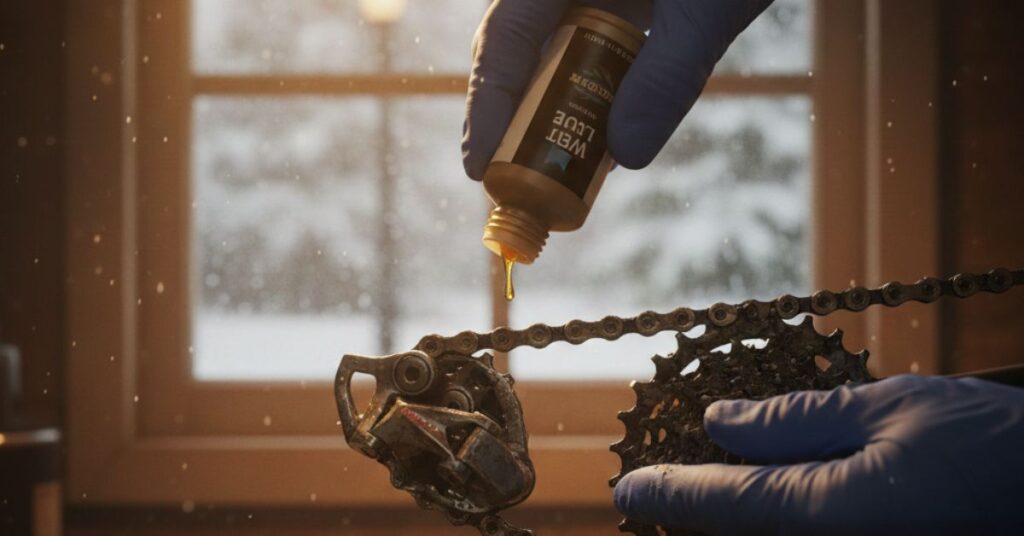
The drivetrain suffers the most during winter commuting. Chains rust faster, gears clog with grime, and shifting becomes less precise. Switching to a wet-weather chain lubricant makes a noticeable difference. Wet lube is designed to cling to the chain in damp conditions, offering better protection against rain and road spray. Applying lubricant correctly is just as important as choosing the right type. Work it into the chain, allow it time to penetrate, and wipe away any excess. A heavily oiled chain attracts dirt, which speeds up wear. Regular attention, even if it is only a few minutes every week or two, can dramatically extend the life of your drivetrain and keep your ride quiet and smooth.
Choosing the Right Tyres for Winter Commuting
Tyres play a huge role in how confident your winter ride feels. London roads become slippery in cold and wet conditions, particularly at junctions and on painted road markings. Summer focused tyres may feel fast, but they often lack the grip and puncture protection needed for winter. Slightly wider tyres with improved tread and stronger sidewalls provide better contact with the road and greater resistance to punctures. Running them at a slightly lower pressure can improve traction without sacrificing efficiency. A good set of winter tyres reduces the risk of slips and punctures, making each ride feel calmer and more predictable.
Why Mudguards Make a Huge Difference
Mudguards are one of the most underrated upgrades for winter cycling. They transform wet rides by keeping road spray off your clothes, your feet, and crucial parts of your bike. In London, where puddles and damp roads are unavoidable, full length mudguards are particularly valuable. Beyond personal comfort, mudguards protect the drivetrain and brakes from constant spray, reducing wear and the need for frequent cleaning. They also make cycling more pleasant for anyone riding near you. Once you experience a winter commute with proper mudguards, it is hard to imagine riding without them.
Staying Visible in Darker Months
As winter progresses, many commuters find themselves riding in the dark both in the morning and evening. Good lighting is essential, not only to see the road ahead but to ensure other road users can see you clearly. Reliable front and rear lights with sufficient brightness should be considered a core part of your winter setup. Visibility goes beyond lights alone. Reflective elements on clothing, tyres, or accessories help catch the attention of drivers from different angles, particularly in rain or fog. Being seen early gives everyone more time to react, which is crucial during busy London rush hours.

Preparing Your Brakes for Wet Weather
Braking performance often suffers in winter, especially in wet conditions. Water and grit reduce friction, increasing stopping distances. This makes well maintained brakes essential. Checking pad wear, cable condition, and overall responsiveness before winter sets in can prevent unpleasant surprises later. If your bike uses rim brakes, wet weather brake pads can improve performance in the rain. Disc brakes generally perform better in wet conditions, but they still need regular checks to ensure alignment and pad condition. Knowing your brakes will respond when you need them builds confidence and allows you to ride more smoothly in traffic.
Keeping Cables and Moving Parts Healthy
Cold and moisture can cause cables to stiffen and seize over time. Shifting that felt fine in autumn may become slow or unreliable in winter. A light application of lubricant to exposed cable sections can help keep them moving freely. Paying attention to unusual noises or changes in feel can alert you to problems before they become serious. A pre winter service is ideal, but even simple checks at home can make a difference. Smooth running components reduce effort, improve control, and make winter rides feel far less demanding.
Adapting Your Riding Style for Winter
No amount of preparation can completely change the conditions on the road, so adjusting how you ride is just as important as preparing your bike. Slower cornering, gentler braking, and smoother movements help maintain control on wet surfaces. Painted lines, metal covers, and fallen leaves should be treated with caution, especially when turning. Winter commuting rewards patience and awareness. Leaving a little extra time for your journey reduces stress and allows you to ride defensively, even when conditions are poor.

Final Thoughts
Winter may test your commitment to cycling in London, but it also proves how capable a well prepared bike can be. By protecting key components, improving visibility, and making small adjustments to your setup and riding habits, your commute can remain reliable throughout the colder months. The result is fewer breakdowns, lower maintenance costs, and a more enjoyable ride overall. For riders who want expert guidance, reliable servicing, or advice tailored specifically to London commuting, Station Bicycles remains a trusted place to turn when preparing your bike for the challenges of winter.